Showing posts with label Old Navy. Show all posts

Wednesday, January 31, 2018

Florence Mall: Florence, SC

The Deep South, unlike other parts of the country, never was featured often in industry retail photography during the golden age of retail. It is difficult to find quality photos of old stores and shopping centers in these places, but a few exist. One mall oddly stands out: Florence Mall in Florence, SC.  What is curious is that this mall seems to have been featured in a couple postcards when it opened, thus preserving the memory of the long-demalled center in its glory days. As one of the first malls in the state, it was never a large mall, but it had high visibility as an oasis for travelers en route to and from Myrtle Beach: a drive with long stretches of nothing in between.  Located in a small city, this open-air center opened in on August 30, 1965 along U.S. 76 featuring department store anchors Belk and J.L. Coker Company as well as grocery store A&P and a Roses (five and dime).  JCPenney would not arrive at the mall for two more years, but it would become the mall's largest anchor tenant.


Another curious thing about the mall is its striking similarities to the original Richland Mall in Columbia and Tri-Cities Mall in Forest City, NC.  Were they all built by the same developer?  The developer of this mall was a partnership of Alexander Corporation and Masten-Langston Realty of Charlotte.  Downtown merchants were highly displeased with the opening of this mall, and they sought to steal some of the thunder by converting a portion of West Evans Street into a pedestrian mall in 1967.  However, that project was too little, too late as JCPenney was already in the process of moving to Florence Mall with Coker's and Belk already at the mall.  While the downtown mall would ultimately be removed, another mall rose up and overtake Florence Mall much sooner.  In all, Florence Mall was able to dominate the market for about 14 years until it was supplanted by larger, enclosed Magnolia Mall, which opened in 1979. Considering how much smaller it was than Magnolia Mall, it's not a surprise it lost its anchors, but the funny thing is it never really died.


Postcard image by Ernest Ferguson of the mall in its prime followed by an image posted in the Charleston News (now Post) & Courier showing the mall's Belk store.

People have asked if a mall still exists, and photographer Mike Kalasnik is about to find out.


A low fence did not hold back Mike Kalasnik from checking out what was beyond.


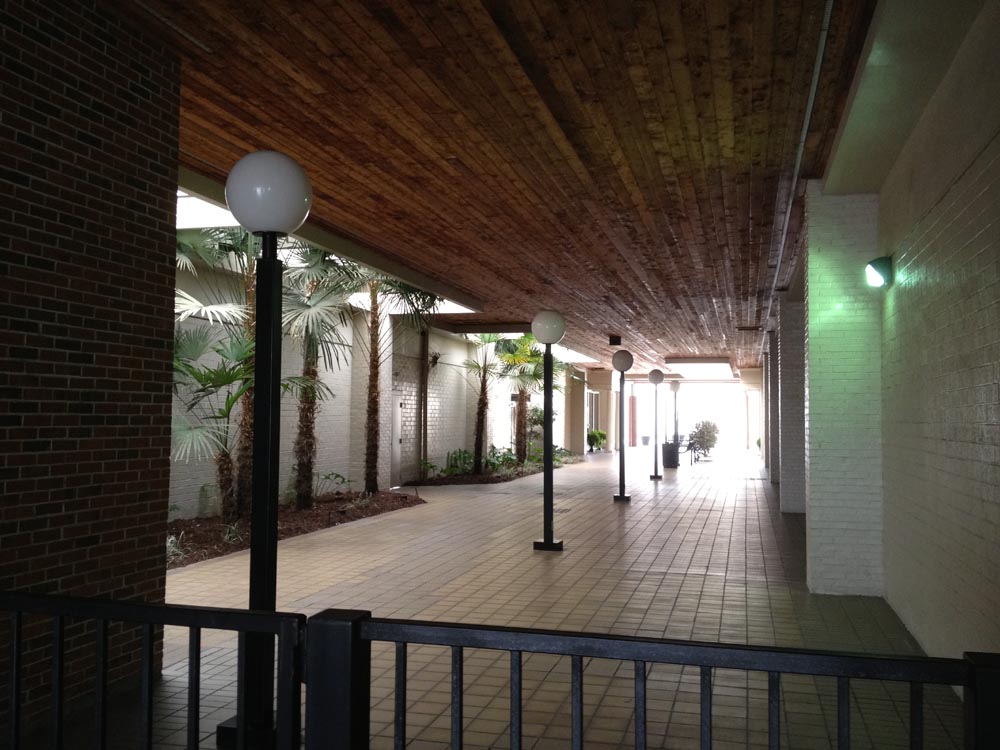
Scenes like this are why the old malls were so much better than the malls of today...a moody mix of dark tones and peculiar placement of skylights with trees and plants growing to them.  Belk was originally on the right.  Photos by Mike Kalasnik taken February 3, 2012.

According to the Florence Morning News, two years after Florence Mall opened, the mall underwent a major expansion that added 126,000 square feet.  This addition, which opened on August 17, 1967, brought in the forementioned JCPenney along with 20 additional stores and a Piggly Wiggly on an outlot on the west side of the mall.  Piggly Wiggly would later take over half of the old JCPenney years after JCPenney departed.  The former Piggly Wiggly today is subdivided among a Sprint store, Game Stop, Jos. A Bank, and other tenants and is unrecognizable.  In addition, Belk added 10,000 square feet to their store.  This addition brought the mall's square footage up to 288,000 square feet.  It was this addition that solidified the mall's position in the market while finishing off downtown Florence as a shopping destination.


While no actual picture is available, here is an add from the Florence Morning News showing us its classic "Funky P" store as it looked when it opened on August 17, 1967.


This Penney's ad not only shows an architectural drawing of the store, but also includes some awesome Penney's branded electronics.  JCPenney phased out electronics in 1985.  (Florence Morning News, August 17, 1967)


This ad here is golden.  Not only does it show us how AMAZING the original mall sign was, but it also gives us a glimpse of the old "Funky P" mall entrance that remained at this location until 1980 meaning that this store operated as JCPenney a mere 13 years!  (Florence Morning News, August 17, 1967)


Even Penney's Auto Center makes a cameo in the grand opening article.  It does not appear to still be standing and is most likely where Wells Fargo is today. (Florence Morning News, August 17, 1967).


Belk expansion ad.  This appears to have been just before the introduction of the big "B". (Florence Morning News, August 17, 1967)


Porter's Gift Shop apparently moved from downtown to the mall during the 1967 addition and continued to operate there years after JCPenney and Belk departed closing sometime after 2012.

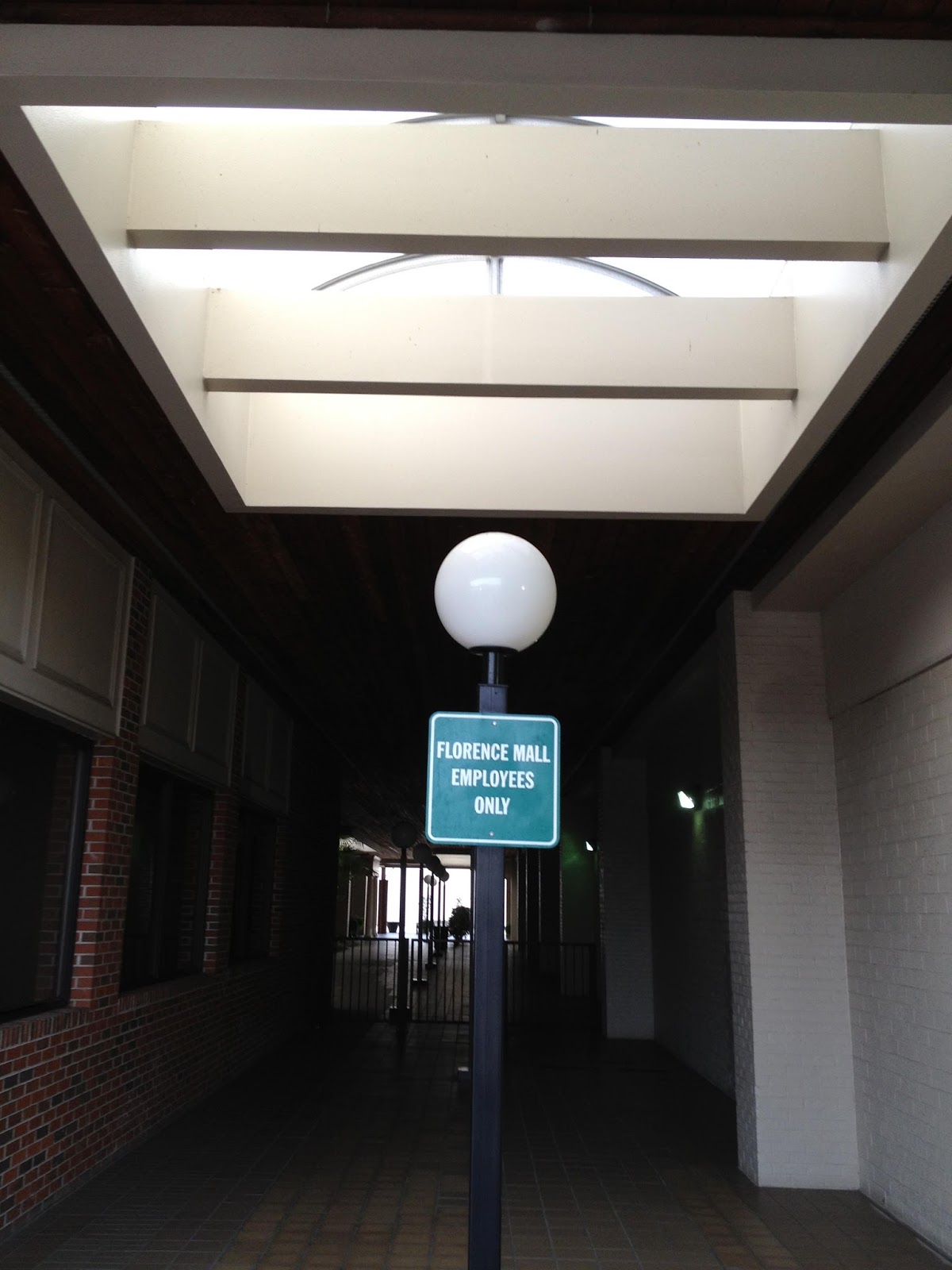
During the 2000's, the interior mall courtyard was mostly closed off to the public.  However, most people do not realize that much of the old mall is still there with the mall portion hidden from the public behind an "employees only" notice.  Essentially, instead of converting the mall into a strip, the owners of the mall turned the mall inside out as basically a square strip surrounding a mostly walled-off mall corridor that now functions as a break area for employees and a back entrance for vendors, thus it is no longer open to the general public.  They achieved this by filling in all but one entrance corridor with stores.  How often are these malls hiding from our view that were supposedly redeveloped?


No 60's mall is every complete without a few faux-Colonial touches.  Photo by Mike Kalasnik taken February 3, 2012.


About to enter the mall.  Photo by Mike Kalasnik taken February 3, 2012.
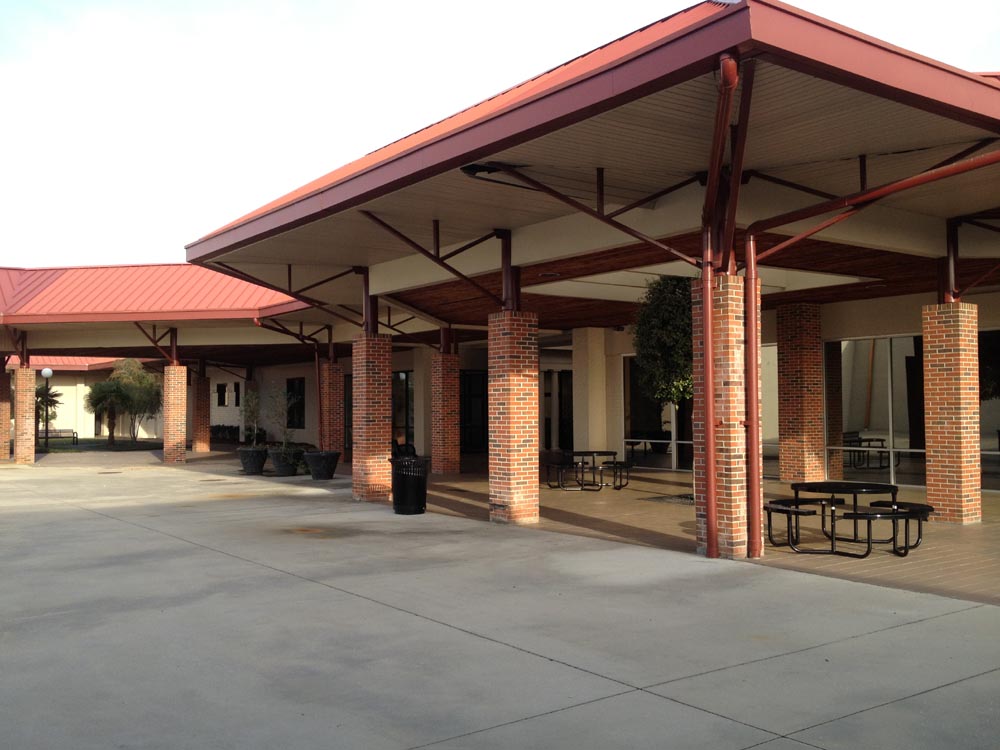

Looking back from the main mall to the one remaining entrance wing.  Compared to the 1960's photo, the overhead walkways look completely different now.  The entrance wing that still exists is on the NE side of the mall.  Photo by Mike Kalasnik taken February 3, 2012.


Looking northeast to the north end of the mall where the "MERRY CHRISTMAS" banner and Belk entrance off to the right was posted.  In the background is now a wall for Ross, which filled in part of the mall corridor.  Photo by Mike Kalasnik taken February 3, 2012.


The wood-grained ceiling and update of the overhangs was most likely done sometime in the 1980's as a means of trying to renovate the mall back into legitimacy.  It clearly did not work to save the interior mall.  Photo by Mike Kalasnik taken February 3, 2012.


Walking toward the former location of JCPenney.  The planter itself might be original.  Photo by Mike Kalasnik taken February 3, 2012.

The curious thing about Florence Mall is that it did not follow the usual pattern of older open-air 1960's malls in that, while it died as a mall, it remains a major retail center as part of the retail corridor supporting Magnolia Mall nearby.  By filling in the main entrance corridor and making the other entryways less accessible, they have effectively demalled the center without demolishing a single structure!  Compare that to other similarly designed open-air malls like Tri-City Mall in Forest City, NC.  That mall is mostly vacant in the core despite two healthy anchors.  Also, unlike Tri-City Mall, the interior mall corridor apparently received a major update sometime in the 1980's or 1990's so that it does not resemble the postcard views of the mall with the A-frame canopies.


  Continuing toward the former JCPenney.  Cokers was originally on the left.  Photo by Mike Kalasnik taken February 3, 2012.


Mike finds a mysterious door off to the left.


Where did this door go?  Was this the mall entrance to the original Cokers or was it something else?  Photo by Mike Kalasnik taken February 3, 2012.


To the right, Mike finds what appears to be the southwest mall entrance corridor opened up.  It was sealed off after the 2000 "demalling"


Once upon a time, shoppers came upon the mall entrance to Funky P.  Today, a few mall employees come across a giant concrete slab with an overhang covering an emergency exit.  Photo by Mike Kalasnik taken February 3, 2012.
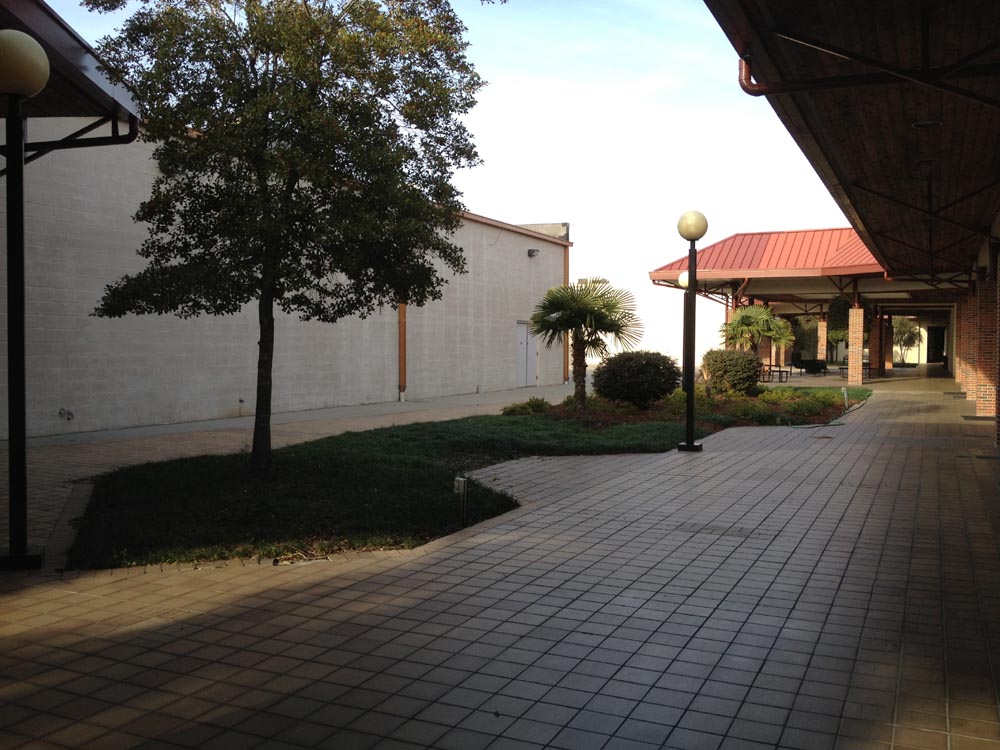

Looking away from the former JCPenney back into the main mall.  Why is the mall on the left suddenly a void here?  Photo by Mike Kalasnik taken February 3, 2012.

The loss of the interior mall was slow, but the anchor losses came very quickly.  When Magnolia Mall opened, Belk, JCPenney and Roses all fled to the newer, larger mall.  Belk and Roses left in 1979 while JCPenney left in 1980.  Coker's was sadly left behind, apparently unable to afford the move.  By 1982, they threw in the towel and closed the entire chain.  The loss of Coker's was not exactly a small deal.  It was a department store that had been in business since 1865, and it had locations in Sumter, Myrtle Beach and a half-block long flagship store in Hartsville in addition to the Florence Mall store.  While not much is known about the store today, it was one of several prominent department stores in South Carolina that found they were unable to compete with the influx of larger, improved chain department stores and enclosed malls.   Coker's was sold at the mall, but it is not clear what it was immediately after it was sold.  The loss of anchors did not mean that all of the empty stores anchors remained vacant, however, as it was still located on a hot retail corridor close to the new mall.  This meant that the once dominant mall was, for a few years, repurposed as an ancillary mall.


Cokers ad from 1975 from the Charleston Times (Post) & Courier.


  Photo by Mike Kalasnik taken February 3, 2012.


This one skylight is located near the "employees only" entrance in the main mall.  Photo by Mike Kalasnik taken February 3, 2012.


A very South Carolinian planter scene complete with palmettos.  Photo by Mike Kalasnik taken February 3, 2012.


Piggly Wiggly (former JCPenney) with the former store entrance rather obvious based on architectural cues.  Redbone Alley takes over part of the store in the second photo.  Photos by Mike Kalasnik taken February 3, 2012.


  Photo by Mike Kalasnik taken February 3, 2012.

Something to remember is that, despite its small size, Florence Mall was a pretty substantial mall for its day. The mall included a national department store, five-and-dime, two grocery stores, a local department stores, and a regional department store. This also resulted in many stores having both interior and exterior access making the stores easy to fill when the mall itself began to fail.  Belk was replaced by Peebles, and the vacancy left by JCPenney was later replaced in part by Piggly Wiggly in 1985. It is not certain about how long A&P remained, but it likely remained in the mall up until A&P pulled out of the market in the 1980's.  It is not clear what else was there in the interim, but it did appear that the vacancies remained high in the mall throughout the 80's and 90's.  Peebles most likely closed by the 2000's, consolidating with a nearby store that is today Goody's.


Blink and you miss it.  This is the narrow corridor that Mike found to access the real Florence Mall (what's left of it).  Photo by Mike Kalasnik taken February 3, 2012.
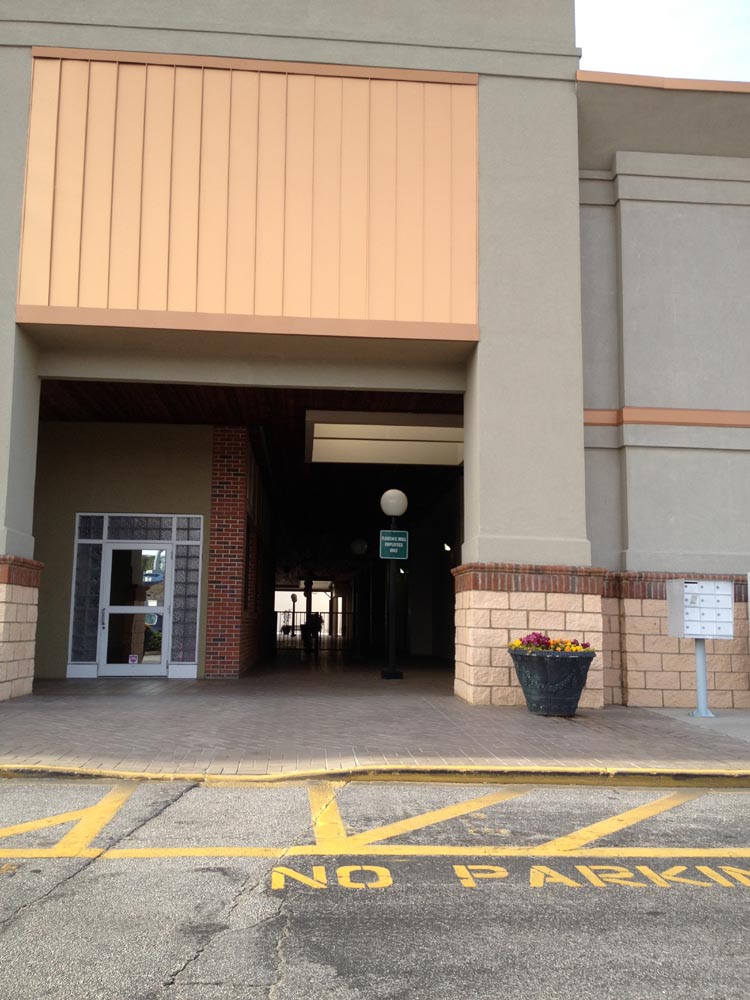

The back side of now-closed Porter's Gift Shop is the approximate location of the arched doorway found in the mall.  What was this originally?  This is inset next to the former JCPenney on the left.  On the right (not visible) is the former Coker's.  Photo by Mike Kalasnik taken February 3, 2012.


Cici's Pizza takes up part of the former Belk and covers up the northern mall entrance corridor.  This is the precise location of the "MERRY CHRISTMAS" banner next to Belk, but facing in the opposite direction.  Photo by Mike Kalasnik taken February 3, 2012.


Piggly Wiggly from this angle gives no indication of its former life as JCPenney.  Photo by Mike Kalasnik taken February 3, 2012.


Dress Barn fills in tenant space next to the one remaining interior entrance corridor.  Photo by Mike Kalasnik taken February 3, 2012.


Rugged Wearhouse is owned by Gabe's (formerly Gabriel Brothers) and Shoe Carnival filled in former mall space and the front entrance corridor.  Photos by Mike Kalasnik taken February 3, 2012.

In 2000, the mostly dead mall got its makeover by turning the mall inside out.  By that point, what stores were left mostly had parking lot access and closed off their access to the mall itself chosing instead to face the parking lot.  This resulted in a closure of the mall around 2008 to the public with the rest of the stores filled with mostly big boxes.  It helped that every anchor except for JCPenney was a smaller inline store.  Thus, quite a few anchor changes took place since 1979.  Peeble's later closed and was replaced by Ross, which uses part of the original mall area for storage and deliveries.  Coker's is today Stein Mart, which means it is possible this was an early location of Stein Mart (opened in the 80's).  T.J. Maxx also came to fill the A&P slot that had previously been subdivided into smaller stores.  Redbone Alley took over the vacant half of the former JCPenney next to Piggly Wiggly, and the former Rose's became Ulta.  Other stores would follow turning a dead open-air mall into a very healthy, but oddly shaped strip mall.  What was done was what needed to be done, but it is a shame these stores cannot open up into the courtyard to give shoppers an option to relax in the middle of shopping.


Stein Mart had originally operated as Coker's Department Store from 1965-1982.  Photo by Mike Kalasnik taken February 3, 2012.


Ross was Belk from 1965-1979 and was Peebles for an unknown period after Belk left the mall.  Photo by Mike Kalasnik taken February 3, 2012.


Ross's delivery entrance is what was originally the northern entrance to the mall corridor with Belk on the left and A&P on the right.  Photo by Mike Kalasnik taken February 3, 2012.


T.J. Maxx was formerly A&P and faces the front of the mall.  Photo by Mike Kalasnik taken February 3, 2012.


Petco, Ulta Cosmetics, and JoAnn Fabrics are under construction in this view.  JoAnn filled in what was a front mall entrance corridor next to JCPenney.  Ulta was originally the Roses location.  Photo by Mike Kalasnik taken February 3, 2012.


The mall's logo being an asterisk is highly appropriate since it is a *mall.  Photo by Mike Kalasnik taken February 3, 2012.

In a sense, Florence Mall has come full circle.  While new tenants filled in much of the mall's old space, many smaller tenants remain vacant in the middle of the closed-off mall.  Today, that interior mall is being marketed for office space while the exterior is the healthiest it has been since the 70's.  Meanwhile, nearby Magnolia Mall is starting to struggle from the troubles with the department store industry.  Both Sears and JCPenney have left the mall leaving only one traditional department store left with Belk.  These vacancies at Magnolia Mall may again pull stores from Florence Mall who will be seeking deals from desperate mall managers.  While it is good that the mall was not actually torn down, it would be nice to see what was there one day opened again to the public: perhaps in a time after larger superregional malls like Magnolia have run their course.
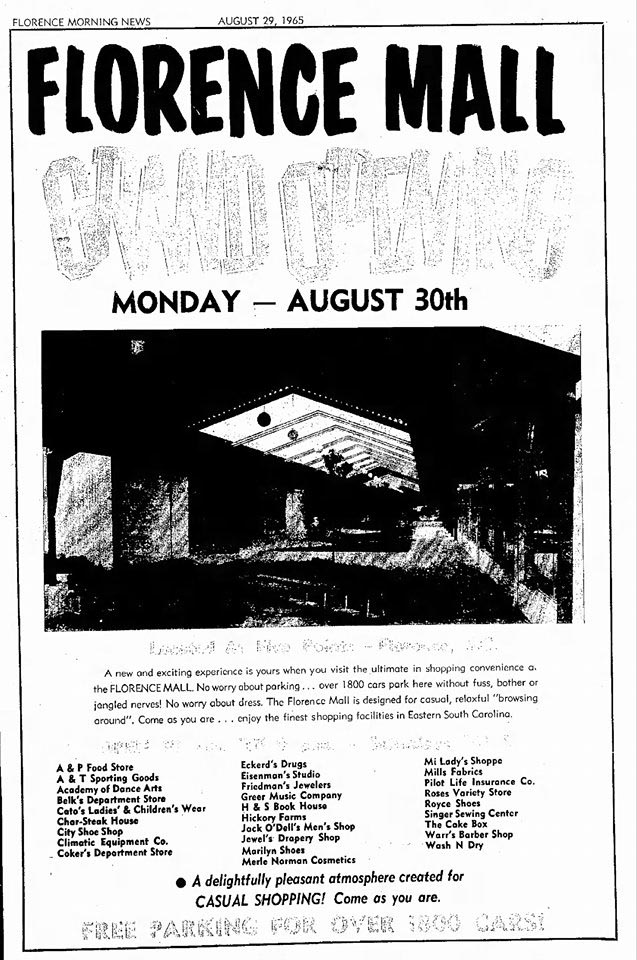

Grand opening ad with full list of original tenants.  Notice that JCPenney is not listed.  It did not arrive for nearly two more years.  Image from the Charleston Times (Post) & Courier.


Downtown's reaction to the construction of Florence Mall.  Image from the Charleston Times (Post) & Courier.


A crudely-drawn map produced in 2013 showing the approximate original anchor line-up in the mall and orientation of corridors.


Wednesday, January 13, 2010

Columbia Place Mall: Columbia/Dentsville, SC

The very first two-level shopping mall in South Carolina was Columbia Place Mall, opening on the northeast side of the city in 1977 near the convergence of then-incomplete I-77, I-20 and the newly constructed SC 277 freeway.  It is an ideal location geographically, and it was uniquely large for the city and its time.  With all it had positive, it appeared it would eventually become dominant.  The past year, however, was not a good year for the mall and it is clear that this mall was not what it once was.  After all, Columbia Place is a fairly large mall in a city that is absolutely over-malled, and the scene today presents many challenges for the 33 year old center.


When looking at the mall around 2000, the anchor line-up looked solid for the mall with Rich's, Dillard's, Sears and JCPenney.  The Rich's location, South Carolina's first location of the iconic Atlanta institution, was the only such store in the city.  It arrived along with three mini-malls scattered across the city anchored by their discount division Richway, so Columbia Place was at the time a very ambitious arrival.  It was also undoubtably worrisome for older and smaller Dutch Square Mall.  People in the city were obviously impressed, because the mall stayed largely successful for over 25 years.  The only problem was that something was not being considered: none of those stores were Columbia's stores.  Regardless, that did not seem to matter since Columbia in that period was increasingly resembling a junior Atlanta retail-wise.


Looking from the former Dillard's wing toward Macy's.  The first photo is of the center court, decked out on Decker Blvd.


Walking towards the former JCPenney along the main mall concourse.


Mall map, which shows a very basic two-level mall.  It is at least up-to-date.

In layout, Columbia Place is also ironically similar to Cumberland Mall in Atlanta.  Sears was the south anchor, JCPenney the north anchor and Rich's the west anchor on the back side.  A food court opened on the upper level near Sears.  The mall was also always a two level mall, catering to a similar super regional demographic like Cumberland Mall.  The only difference was that the east anchor opened as Belk instead of Davison's.  In fact, Belk's position there was strange when considering that there actually was a Davison's operating downtown when the mall opened that suprisingly did not join the mall.  Belk did not have any other mall-based locations in the city when it opened, either.  Over time, the mall became somewhat of a run-of-the-mill mall, but it was one of only two two-level malls in the entire state up until the time that Richland Mall was built on the site of a much smaller open-air mall.


While the mall has vacancies throughout, no part of the mall seems to be having more trouble than the former JCPenney wing.  Piccadilly Cafeteria and other shops hang on, but it is quite empty.  To the left was a two-story built-in Old Navy, which recently closed along with many other inline stores.  While this mall failed to impress me, that does not mean that I like seeing this happen.


JCPenney was split in two after they left at the peak of the lifestyle center craze.  The upper level functioned as Steve & Barry's until early 2009 while the bottom level continues to operate as a Burlington Coat Factory.


View of the court area in front of the former JCPenney.  These Christmas lights tend to make the mall more festive, but are a bit frustrating for photo purposes.  I say that as if they were planning on me coming and taking photos.

Columbia Place was a retail rock up until the turn of the century.  By that time, the mall was beginning to see changing demographics as the prosperity began to move further out in the county.  The first change occurred in 1998 when Belk was replaced by Dillard's, which initially looked to be an upscaling of the center.  However, nearby Decker Mall, housing Kroger Sav-On and Target, emptied out in 1999 with both stores moving further up Two Notch Road.  Nevertheless, the mall received a complete renovation in 2002 that was meant to keep the mall competitive.  Nevertheless, the retail scene had changed dramatically since it opened.  What was two malls in the city in 1977 became four malls with Columbiana becoming the dominant regional draw and Richland Mall diluting the customer base of Columbia Place.  The sucker punch, though, came in 2005 when a shiny new lifestyle center opened at the intersection of Two Notch Road (US 1) & Clemson Road known as Village at Sandhill.  Not only did this draw retail from the periphery, but it also stole away JCPenney.  The mall did manage to fill the void, however, bringing in Steve & Barry's on the upper level and Burlington Coat Factory on the lower level.  2005 also saw the transition of original anchor Rich's into Macy's, the first time the Macy's name had returned to the city since the downtown store closed more than a decade before.


 Moving now into the Sears wing, the mall's escalators tend to drop down in non-descript central locales away from center court.  The little girl is actually an advertisement by the mall encouraging advertisers to buy a banner.  These banners are one of the ugliest things to happen to malls as of late, but I guess they're needed to pay for the enormous heating and air-conditioning bills.


Standing in front of Sears.  The food court is off to the left.


Now back to Macy's.  Note the staircase has not been fully renovated unlike the rest of the upstairs walkway judging by the very 70's corduroy concrete.  Macy's mall entrance, which still carries the Rich's design, was a bit of a disappointment.  As one of only two Macy's and formerly Rich's in South Carolina, indeed such detail was probably not given as much priority.


A closer look at Macy's.  While the sign is backed by black reflective glass, it is also cut into the diagonal shapes so popular in that period that were commonly used for cedar-sided buildings.


Looking up to the ceiling from downstairs in the center court.  These octagonal skylights are definitely from another time.  What I do not like, though, is the ceiling includes the introduction of the industrial ceiling treatment, which made an unfortunate debut in the late 70's and exploded in popularity in the 90's.  Why cant it go out of style like now?

Since the 1990's, medium-sized cities with multiple malls like Columbia have discovered multiple malls found it more difficult to compete due to store consolidation, retail saturation and declining demand.  This caused weaker players to fall behind with one mall emerging as the strong, leading mall.  Columbia Place is in that awkward position right now with Columbiana clearly emerging as the superstar of the city to the west and Village at Sandhill poised for eventual dominance in the east.  Beginning in 2009, the situation went from bad to worse when Dillard's decided to bail out from the mall, leaving only one location in the city at Columbiana.  Old Navy, a large two-story junior anchor, also left on the same wing where JCPenney was.   On top of that, Steve & Barry's also left when the chain went bankrupt early in 2009.  The mall now only retains Sears and the only Macy's location in the city, though Burlington Coat Factory keeps the old JCPenney half-occupied.  The survival of the mall completely depends on the retention of Macy's, which is bound to make management nervous considering the available anchor pad at Columbiana, space intended for Dillard's at Village at Sandhill and the empty anchors at Richland, which despite Richland's dying state has still maintained a semi-upscale status.


Approaching the former Dillard's, which opened as Belk.  Dillard's renovated the interior but made no such attempts on the exterior.  It is likely the only instance I know of where a Dillard's took over a Belk.  It lasted there 12 years and thoroughly employed those Belk arches.


Here is a closer look.  Any ideas on who might like this store?


A look inside from the lower level.  Seeing this ominously reminds me of when I was able to look straight into the closed Belk/McRae's at Century Plaza. 


A view of the Sears mall entrance from the lower level.  Nothing special here, unfortunately.  Sears and Macy's seem to have a special place in their heart for older malls who lost most of their other anchors.  If they didn't, there would be quite a few more abandoned malls.

The mall itself is also not a very enjoyable shopping experience.  The parking lot at the mall was noticeably empty compared to other malls, and most national chain stores have left the mall.  Not only was the mall lacking in selection, but mainly it was boring.  The departure of Dillard's could not have happened at a worse time.  If they had left back in 2005, the mall could have possibly retrofitted with a lifestyle addition, which would be difficult to finance today.  It is possible the mall has some solid plan to turn around, but the prognosis is not good.  However, Belk may be interested in taking its former store location back, so who knows?


Macy's from the outside.  Because the lower level is actually buried, the west entrance is open with a catwalk connecting the upper level entrance.  Inside is an atrium with stairs on the left, an elevator on the right and a strange nook showcase room next to it.  Inside that room are mature trees which scrape against the glass on the elevator.  The metal trellis is also showing some signs of deterioration with significant rusting on part of it.


A view of the showcase room, which was being used as the Christmas shop.  Someone took a video of the elevator looking into this room, which can be found on You Tube.


A look at the former JCPenney, now Burlington Coat Factory on the lower level, and the Columbia Place mall entrance.

I only hope that somehow if Columbia Place does completely die that it will be for the gain of Richland or Dutch Square.  With three troubled malls and one dominant, I believe that one of the three troubled malls might emerge rejuvinated provided what Macy's decides to do.  Macy's holds the key to save any of three malls.  If Macy's jumps across town and joins Columbiana, all three will eventually fail.  If instead Macy's holds on or joins the two weaker malls, then two malls will survive, giving multiple shopping options to the growing city.  Only time will tell how this will end when the dust settles, because the retraction of Dillard's and exit of Parisian from the market prior to the Belk buyout has been difficult for the malls in the city.  It would help if a dark horse entered such as Nordstrom considering a location at Richland, for instance.  Columbia Place has served the city well, but I only wish that it had been made a bit more appealing.  While this is only one factor, I tend to think that if it was more interesting, it would be more competitive.


Former Dillard's/Belk. This is one of the worst Belk designs.


A not-so-good shot of the Sears from the parking lot.  Lighting was poor around the mall in many areas.


I took this while leaving Columbia Place.  If I don't make it back for two or more years, will this mall be here when I get back?

For more views of Columbia Place, check out this You Tube video.